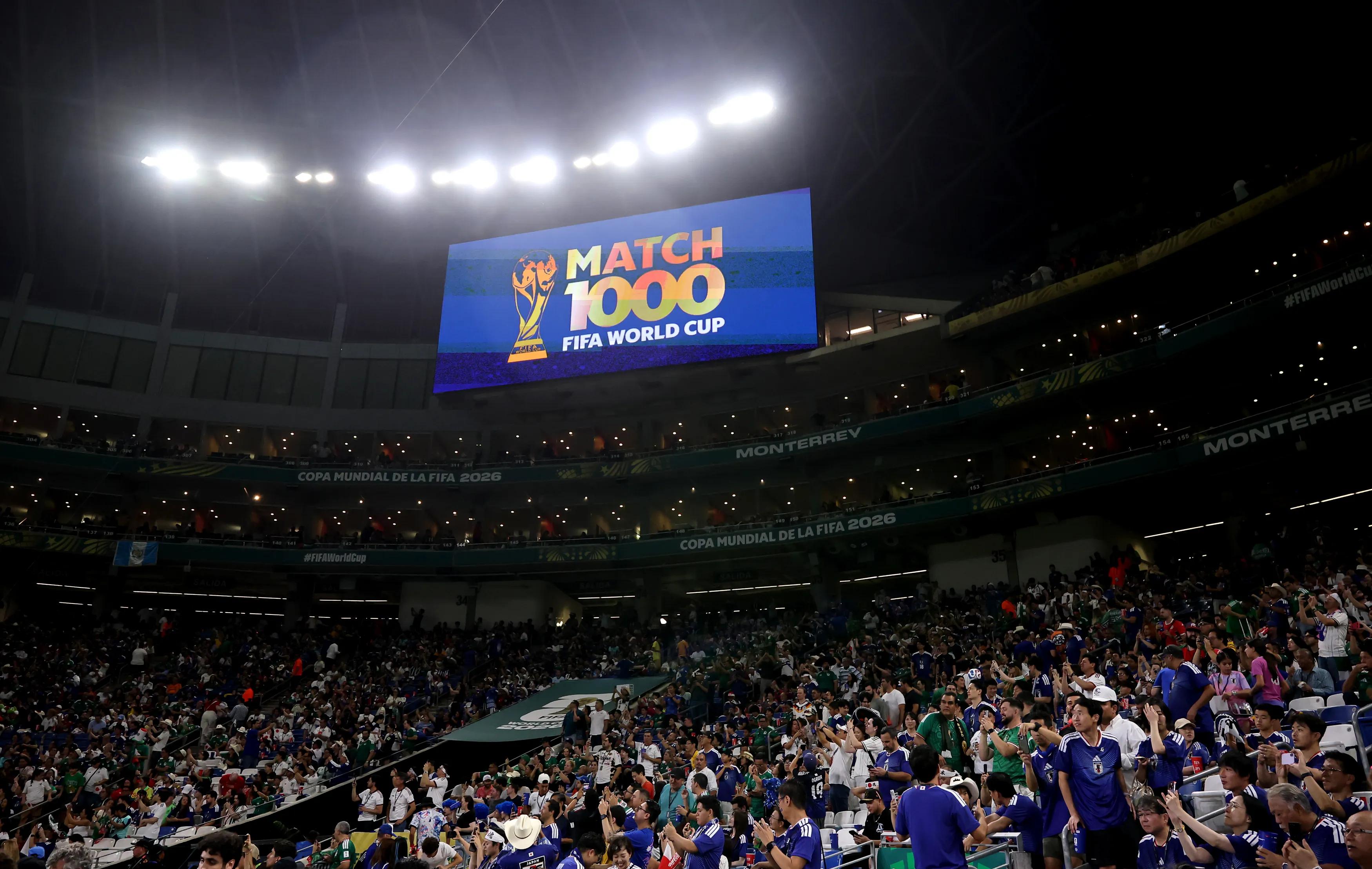
On a July afternoon in 1930, two games kicked off almost simultaneously in Montevideo and the world changed forever. France met Mexico at Estadio de los Pocitos, while the United States faced Belgium at Parque Central. Those were the opening notes of the FIFA World Cup symphony, played in a far smaller orchestra hall than the colosseums we know today. Fast forward nearly a century, and the global showpiece reached its 1,000th match in Monterrey, where Tunisia and Japan crossed paths at the FIFA World Cup 2026 across the United States, Canada and Mexico. The symmetry is impossible to ignore. In 1930, the tournament was a bold experiment with thirteen invited nations, no qualification rounds, and a continent still discovering football's universal language. In 2026, the finals have swollen to forty-eight flags, three host nations, and a television audience measured in billions. Yet the emotional grammar remains identical: young players stepping onto the pitch knowing they are part of something larger than any club rivalry, older fans hearing anthems that connect childhood memories with present joy. The 1930 edition gave us Lucien Laurent's historic first goal and the United States' unlikely semi-final march. The 2026 milestone delivered Japan's emphatic statement and Tunisia's resilient participation. Both tournaments asked the same question: can a single sport truly belong to the entire planet? The evidence suggests it can. From the modest stands of Montevideo to the packed arenas of North America, the World Cup has become a moving museum of human ambition. What makes the 1,000th fixture special is not the round number itself, but the proof it offers of continuity. The children who watched Laurent score in 1930 are gone, but their grandchildren now stream matches on pocket-sized screens. The tactics have evolved, the athletes are faster and stronger, and the rules have been refined, yet the dream remains untouched. As the FIFA World Cup 2026 continues its journey across three nations, this milestone reminds us that every match is both an ending and a beginning, a nod to Montevideo and a wave toward whatever comes next.
🔥 HEADLINES
From Montevideo to Monterrey: echoes of the first World Cup in the 1,000th game
HOME
VS
AWAY
?-?
POSS: 56% / 44%
SHOTS: 18 / 8