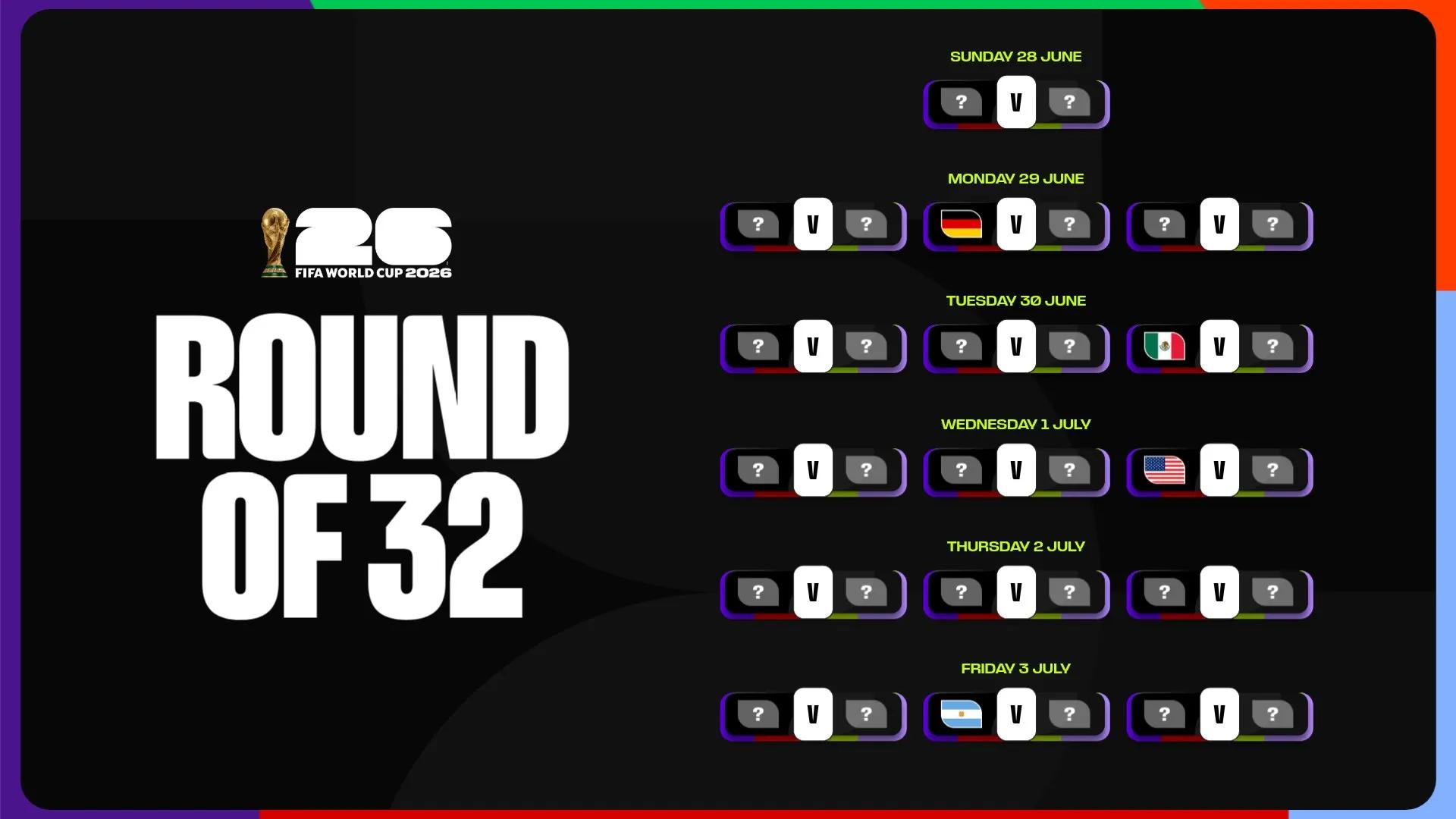
There was a particular tension in the air during the final round of group matches at the 1998 FIFA World Cup France™. The tournament had expanded to thirty-two teams for the first time, and the arithmetic of qualification was more complex than ever. Fans needed calculators, cross-results and a healthy dose of optimism to work out whether their team would survive. Matches in different stadiums unfolded simultaneously, each goal rippling through the standings and altering the fates of teams hundreds of kilometres apart. The expanded format turned the closing group days into a drama of permutations. The 2026 FIFA World Cup™ in the United States, Canada and Mexico has taken that theatrical complexity and magnified it. With forty-eight teams divided into twelve groups, the race for the thirty-two knockout places is a sprawling chessboard. Third-placed teams now qualify, head-to-head records carry new weight, and the difference between progress and elimination can rest on a single goal scored in a distant city. Mexico secured early passage as Group A winners, the United States followed swiftly in Group D, and Germany, Argentina and France all booked their places with victories to spare. Yet for every calm qualification, there is a nervy equation still waiting to be solved. The parallel with France '98 lies in the sense of a tournament outgrowing its old certainties. In 1998, the expansion to thirty-two teams was viewed with suspicion by purists who feared dilution; instead, it produced unforgettable narratives and broader representation. In 2026, the expansion to forty-eight has prompted similar debates, but the early evidence suggests that the drama has only deepened. More teams mean more stories, more final-day calculations, more moments when a nation holds its breath waiting for news from another match. As the group stage in North America reaches its climax, the qualified and the eliminated are separated by fine margins. Those already through can plan their knockout routes; those on the brink must negotiate the same kind of nerve-jangling arithmetic that defined France '98. Whatever the outcome, the expanded theater of 2026 has already delivered the one commodity every World Cup needs: uncertainty, stretched across three nations and dozens of possible endings.
🔥 HEADLINES
The Field Takes Shape: 2026 Qualification Scenarios Recall France '98's Expanded Theater
HOME
VS
AWAY
?-?
POSS: 44% / 56%
SHOTS: 17 / 17