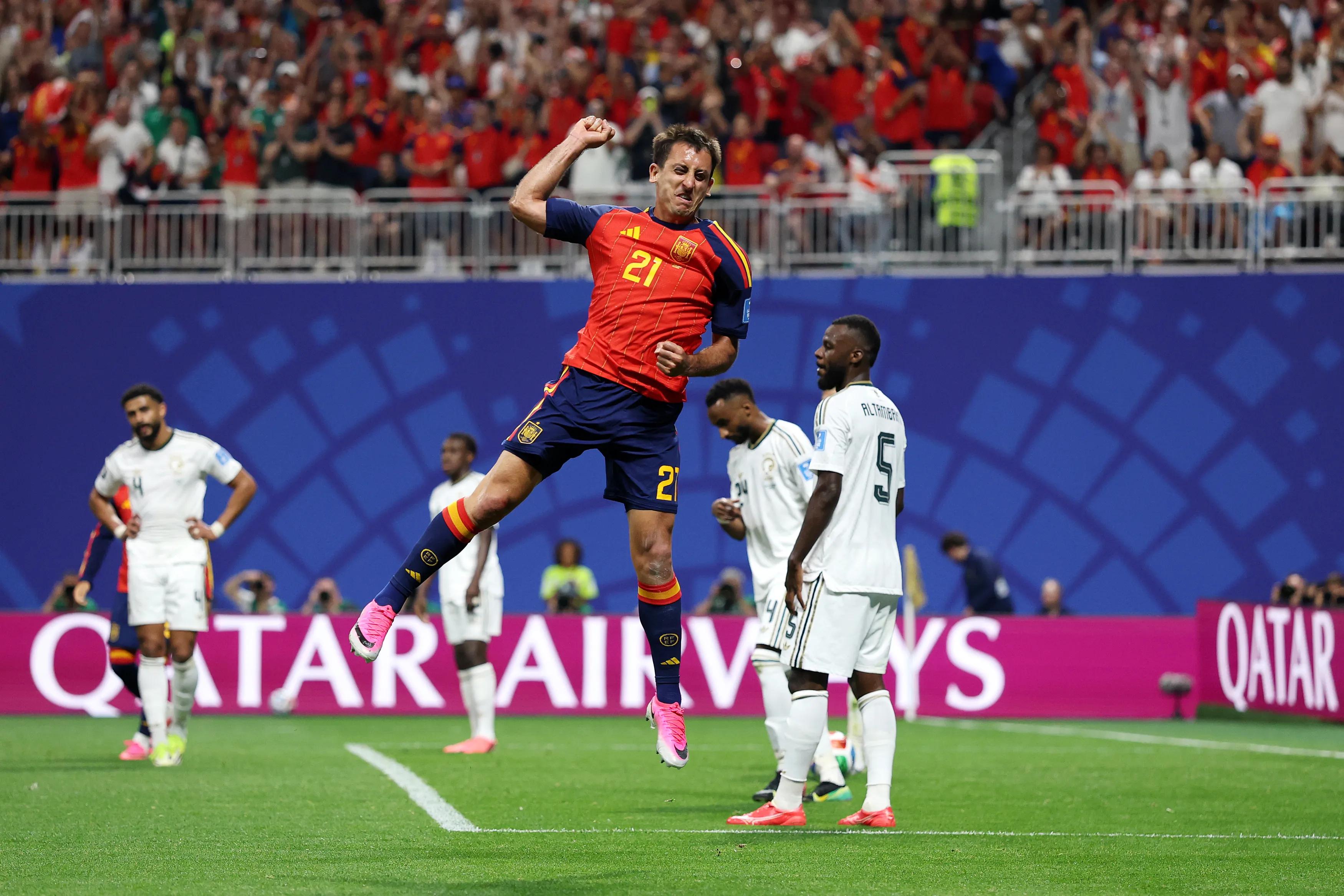
Spain's 2010 FIFA World Cup campaign in South Africa began with one of the most shocking results in tournament history. The European champions, boasting arguably the finest generation of players the country had ever produced, lost 1-0 to Switzerland in their opening group match. For twenty-four hours, questions swirled about whether Vicente del Bosque's side had lost their nerve. Then Spain responded with controlled victories over Honduras and Chile, advanced through the knockout rounds, and ultimately lifted the trophy. Their ability to absorb an early setback and rediscover their identity became the defining feature of that campaign. Sixteen years later, at the FIFA World Cup 2026 in the United States, Canada and Mexico, Luis de la Fuente's Spain have traced a remarkably similar arc. Held to a goalless draw by debutants Cabo Verde in their opening fixture, La Roja faced the same whispers of vulnerability that once greeted Del Bosque's team. The response against Saudi Arabia in Atlanta was emphatic. Lamine Yamal opened the scoring inside ten minutes, Mikel Oyarzabal added two clinical finishes before the hydration break, and an unfortunate own goal completed a 4-0 rout that erased any doubts about Spain's credentials. The comparisons extend beyond results. In 2010, Spain's early stumble forced Del Bosque to trust his system and remind his players of their collective quality. In 2026, De la Fuente made decisive adjustments, restoring Yamal to the starting lineup and watching his team rediscover the rhythm that had carried them to the European title. Both managers understood that panic is the enemy of possession-based football, and both allowed their players the time and space to play their way back into form. Of course, 2010 ended with Spain as world champions, and 2026 is still in its early chapters. Yet the psychological lesson of that earlier triumph is already visible: a single difficult result does not define a tournament unless a team allows it to. As Spain prepare for their final group game against Uruguay at the FIFA World Cup 2026 across North America, they do so with momentum restored and the calm authority of a side that has remembered how to turn pressure into purpose.
🔥 HEADLINES
Spain's Saudi statement recalls 2010 Swiss stumble and response: La Roja turn pressure into purpose
HOME
VS
AWAY
1-0
POSS: 55% / 45%
SHOTS: 19 / 13