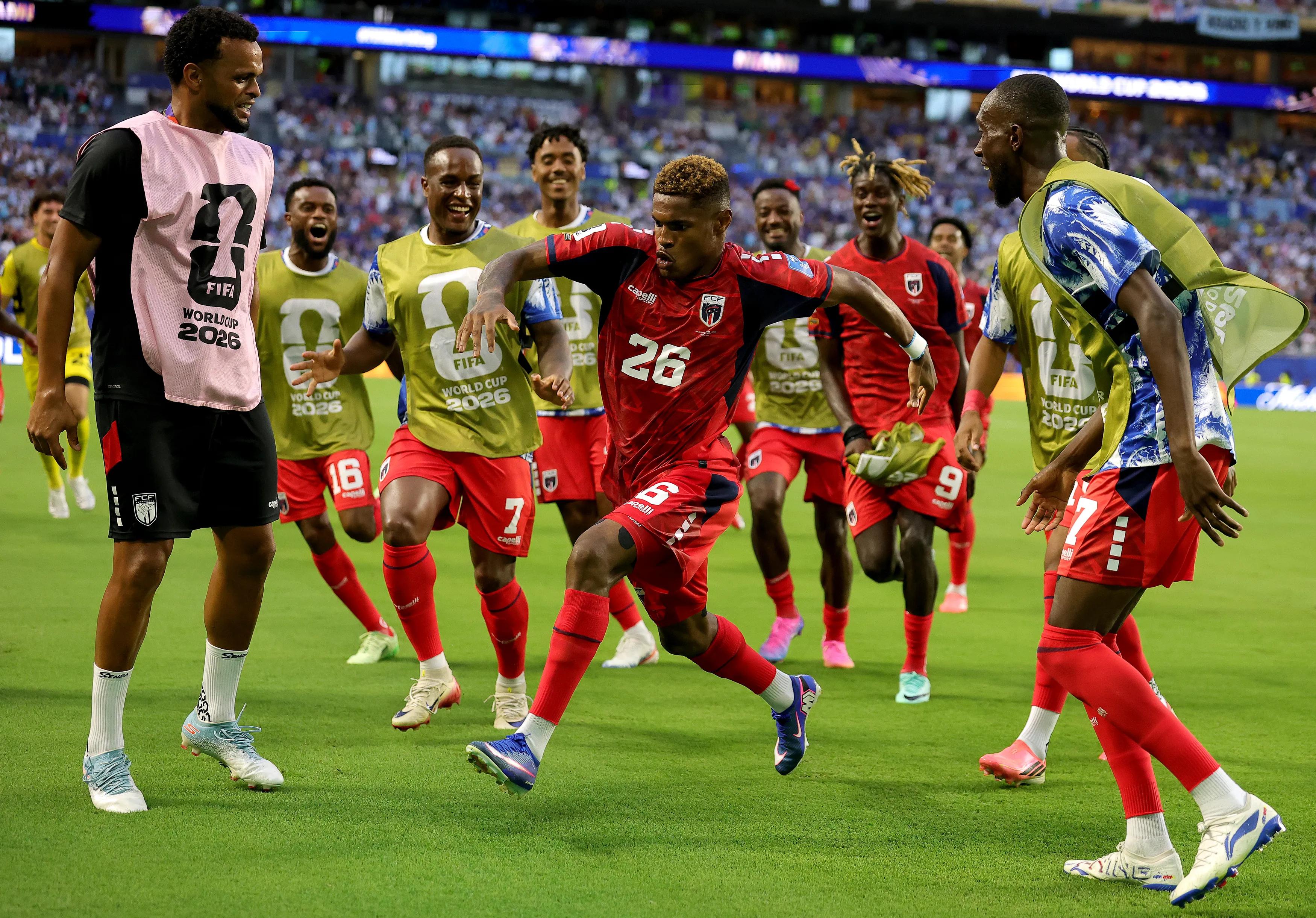
In the opening hours of the Korea/Japan 2002 FIFA World Cup, Senegal arrived as anonymous underdogs and promptly dismantled the reigning champions France with a performance that announced African football's arrival as a genuine continental force. That afternoon in Seoul, El Hadji Diouf sprinted past defenders who had dominated European club football, and Papa Bouba Diop scored a goal that still reverberates across Dakar. Two decades later, the tiny Atlantic archipelago of Cabo Verde has stepped into a remarkably similar narrative at the FIFA World Cup 2026 across the United States, Canada and Mexico. Just as Senegal in 2002 refused to be intimidated by Zinedine Zidane's aura, Bubista's Blue Sharks refused to bow to Spain's possession pedigree in their debut match, grinding out a goalless draw that felt like a moral victory. Then, against Uruguay in Miami, Cabo Verde recovered from a halftime deficit to claim another point, with Kevin Pina's long-range thunderbolt and Helio Varela's poacher's finish showcasing the same fearless spirit that made Senegal's Lions unforgettable. The parallels run deeper than results. Senegal in 2002 were appearing at only their second World Cup and had never won a finals match; Cabo Verde in 2026 are first-timers whose population could fit inside many European stadiums. Both teams turned their outsider status into fuel, defending with discipline and attacking with the conviction that history owes nothing to reputations. Vozinha, at 41, mirrored the experienced calm of Senegal's Tony Sylva, while Pico Lopes organized a backline as resolute as any veteran unit. Of course, 2002 ended with Senegal reaching the quarter-finals and becoming the story of the tournament. Whether Cabo Verde can match that depth remains uncertain; they still must navigate a final group fixture and hope fortune smiles. Yet the emotional resonance is unmistakable. As fans across Cape Verde packed public squares from Praia to Mindelo, the scenes recalled Dakar's nationwide eruption in 2002. The FIFA World Cup 2026 in the USA, Canada and Mexico has already given Cabo Verde a platform no one expected, and their adventure proves once again that the tournament's most cherished chapters are often written by teams who arrive without fear and refuse to read the script.
🏟️ TEAMS
Cabo Verde's 2026 odyssey echoes Senegal's 2002 shock: history rhymes on football's grandest stage
HOME
VS
AWAY
?-?
POSS: 54% / 46%
SHOTS: 20 / 12