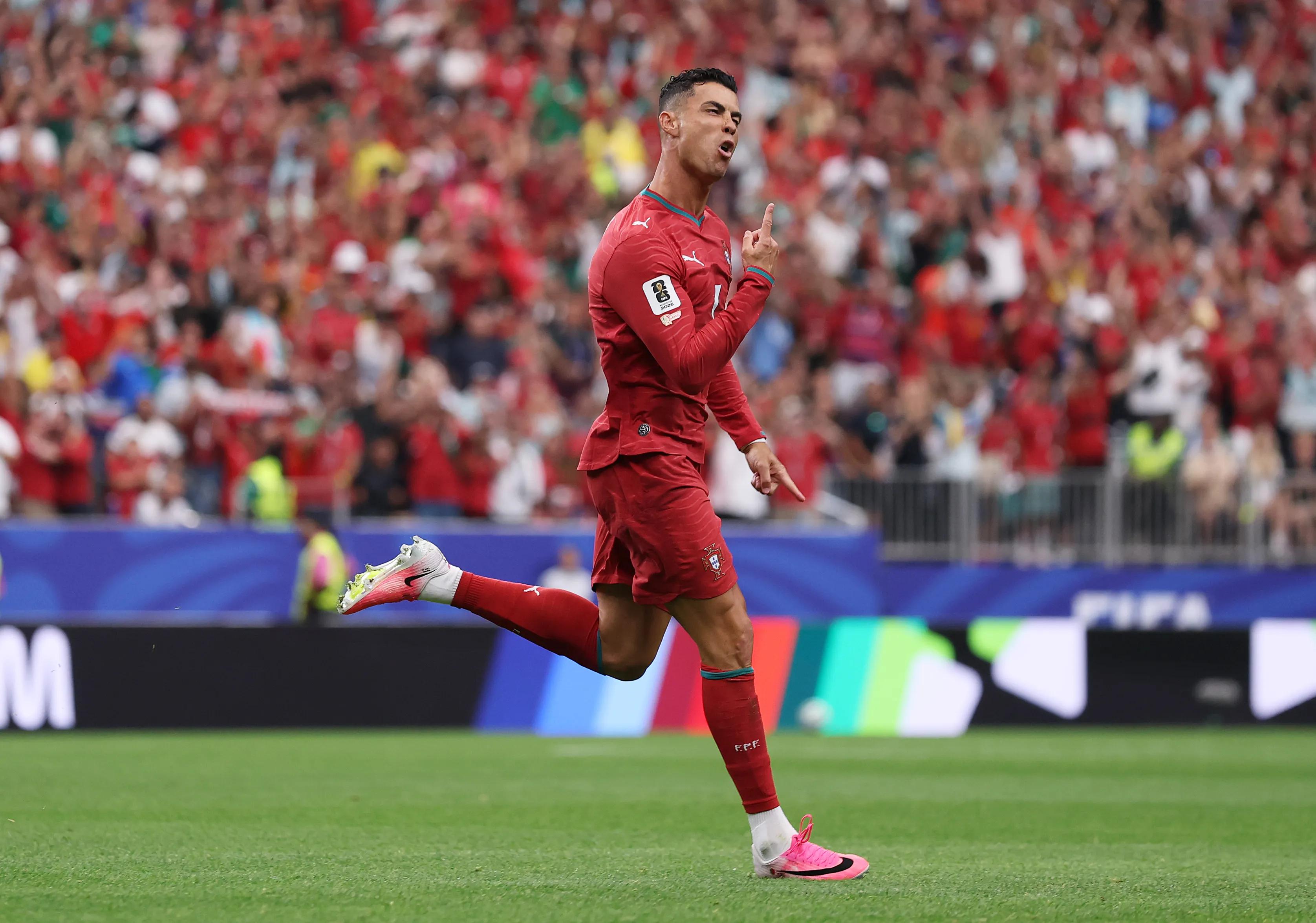
Every Portuguese World Cup campaign eventually returns to 1966. That tournament in England gave the world Eusebio, the Black Panther, whose nine goals dragged Portugal to a semi-final nobody had predicted. His explosive pace, fierce shot and unforgettable leap into the air after his quarter-final haul against North Korea became the founding image of Portuguese football on the global stage. Sixty years later, in the sprawling stadiums of the FIFA World Cup 2026 across the United States, Canada and Mexico, another No. 7 has turned memory into competition. Cristiano Ronaldo did not merely score against a Central Asian debutant; he announced that this tournament would not pass him by. His first goal, a predatory finish from a right-sided cross, made him the first man to score in six different World Cup editions. His second, a precise low drive, lifted him above Eusebio as Portugal's all-time leading marksman at the finals. The younger stars of this generation may dominate social media, but on this night an older force reasserted history's hierarchy. The match itself was a statement of intent. Portugal's full-backs surged, their midfield rotated with confidence, and the attack found angles that left the opposition chasing shadows. Yet the story was always Ronaldo. Where Eusebio announced Portugal to the world, Ronaldo refuses to let the world forget them. As the group stage continues across North America, one question now follows every opponent: how do you stop a man who has already outlasted three generations of defenders? The shadow of Eusebio has always hovered over Portuguese football, a benchmark of what one transcendent talent can achieve on the world stage. Ronaldo's performance in 2026 does not erase that memory; it extends it, proving that the Selecao can still summon a singular figure when the lights are brightest. Across the stadiums of the United States, Canada and Mexico, the No. 7 remains the number the world watches most closely.
🔥 HEADLINES
1966 Eusebio, 2026 Ronaldo: Portugal's World Cup Heroes Echo Through Time
HOME
VS
AWAY
?-?
POSS: 50% / 50%
SHOTS: 12 / 17