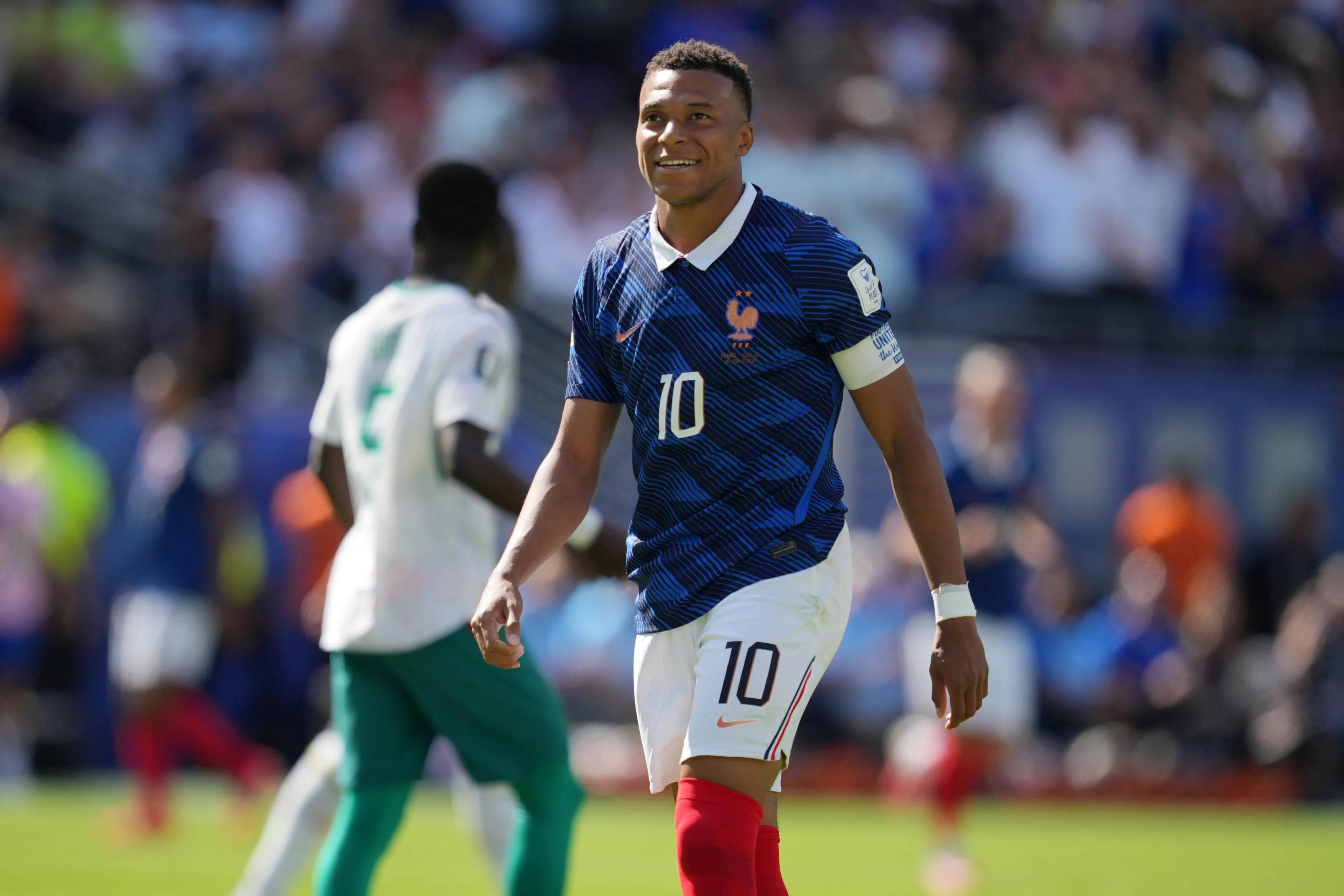
Didier Deschamps lifted the 1998 World Cup as France’s captain, a defensive midfielder whose authority and tactical intelligence embodied a team greater than the sum of its parts. That side ended decades of underachievement and gave Les Bleus a template for winning: discipline, unity and a belief that individual brilliance must serve the collective. Deschamps’ hundredth cap came later, but his legacy was already secured by the trophy he raised in Saint-Denis. Around him, Zinedine Zidane provided the artistry, Marcel Desailly the steel and Lilian Thuram the decisive interventions. It was a team built on balance, and Deschamps was the fulcrum. At the 2026 FIFA World Cup in North America, Kylian Mbappe reached his own century of France appearances in Philadelphia, leading Les Bleus out against Iraq before scoring twice in a commanding 3-0 win. The milestone is more than a number. It marks the transition from teenage phenomenon of Russia 2018 to senior statesman of the co-hosted tournament, from the kid who ran past Argentina to the captain who carries expectation. Mbappe’s first World Cup goal came as a teenager in Kazan; his 100th-cap brace came as a leader in Philadelphia. The arc is unmistakable. Deschamps built the house; Mbappe now renovates it with speed and star power. As France aim to add a third star, the connection between 1998 and 2026 feels deliberate, a reminder that French football’s greatest moments often arrive when leadership and genius find the same moment. In 1998 the nation rallied behind a squad that reflected modern France; in 2026 Mbappe himself has become a symbol of that same diverse identity. The comparisons with Deschamps extend beyond trophies to temperament, the ability to perform when expectation is heaviest. If Mbappe can guide Les Bleus through the knockout rounds in the United States, Canada and Mexico, he will not only match Deschamps’ silverware but also prove that the lineage of French champions remains in the safest possible hands.
🏟️ TEAMS
A century in blue: Deschamps’ 1998 triumph and Mbappe’s 2026 milestone
HOME
VS
AWAY
3-0
POSS: 47% / 53%
SHOTS: 6 / 14